
Narsingdi is a district washed by the banks of the Meghna, Shitalakshya, Arial Khan and Old Brahmaputra rivers. The establishment of Narsingdi district dates back approximately to the 15th century. King Narsingha established a small town named Narsinghapur on the western bank of the Old Brahmaputra River. Over time, many settlements developed along the river and its surrounding chars. Later, the district was named after King Narsingha. At present, the famous Narsingdi district consists of 6 municipalities, 7 police stations, 6 upazilas, 71 unions and 1,095 villages. The total population of Narsingdi district is 2,224,944. Its total area is 3,360.59 square kilometres.
Why is Narsingdi Famous For?
Narsingdi is mainly famous for its traditional handloom industry, textile or garment industry, and delicious fruits (especially lotkon and banana). Besides, Narsingdi district is also famous for agricultural production and ancient archaeological sites like Wari-Bateshwar. Being located beside the Dhaka-Sylhet highway, it is known as one of the country’s important commercial and agricultural centres.
Narsingdi is Popular for Traditional Handloom and Textile Products
Handloom Industry
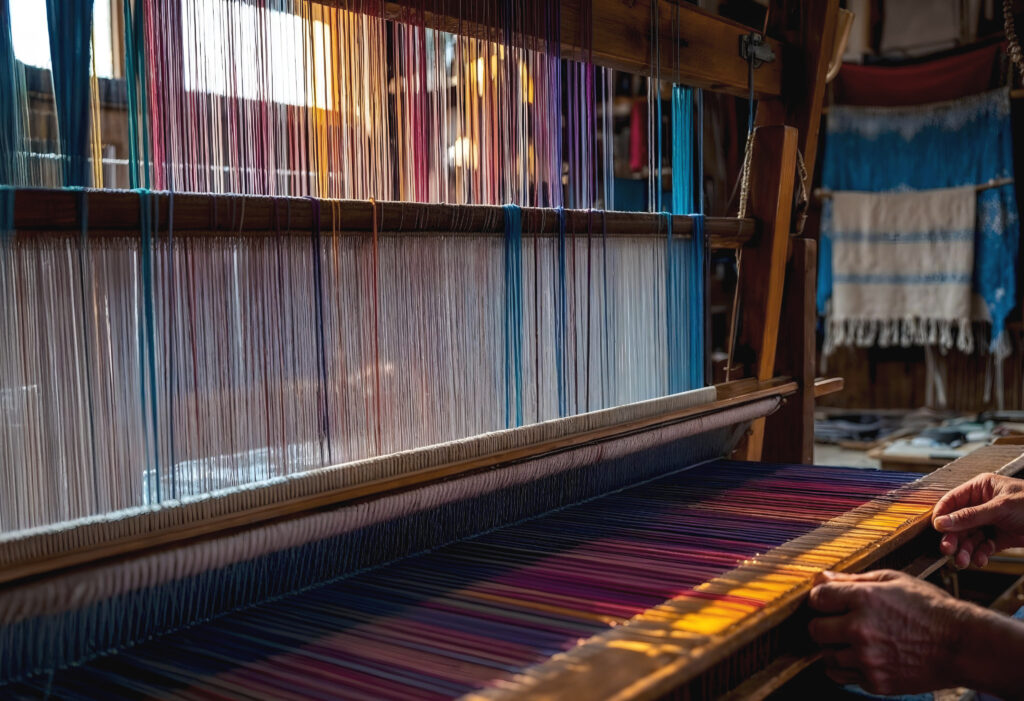
The handloom industry of Narsingdi is a traditional cottage industry of about one hundred years old. It is one of the main textile production centres of Bangladesh, famous for sarees, lungis, gamchas and three-piece garments. In Narsingdi district, hand-operated looms were used to produce sarees, lungis and satin cloth. The sarees were single-colored with thin borders and were 10 yards in length.
In Palash Upazila, during the late British period, white dhoti cloth made on Japanese looms was widely renowned. At that time, gamchas were also produced in this upazila. Around the 1960s, various designs were made on the basis of plain-colored handloom sarees.
Baburhat, located in Madhabdi of Narsingdi Sadar Upazila, is a famous market. Even before the establishment of this market, during the British period and the Non-Cooperation Movement, people of all communities—Hindu and Muslim—used to weave cloth here. Almost every house had 30/40 looms. As a result, this area quickly became famous for cloth. Baburhat market became the most famous cloth market.
Handloom weaving history
During the Pakistan period, plain cloth, gamchas and ornas were woven using hand-operated looms. During the Pakistan period, Tota Munshi, son of Darga Ali Munshi from Rasulpur village of Karimpur union in Narsingdi Sadar upazila, used to weave cotton sarees on Japanese looms. About a hundred people in the area learned this weaving work from him. Another resident of this village, Nazrul Bhuiyan, used to weave katan sarees on Japanese looms.
In Khidirpur village of Pachdona, lungis were produced during the British period. Later, from the Pakistan period, along with lungis, Anwar’s shirting and suiting, khadi cloth, sarees, winter shawls, children’s lungis and gamchas were produced. The handloom industry is part of the material folk culture of Narsingdi district. Since the Mughal period, Narsingdi has been famous for various handloom products. This industry not only meets local demand but also exports its products abroad.
Textile or Garment Industry
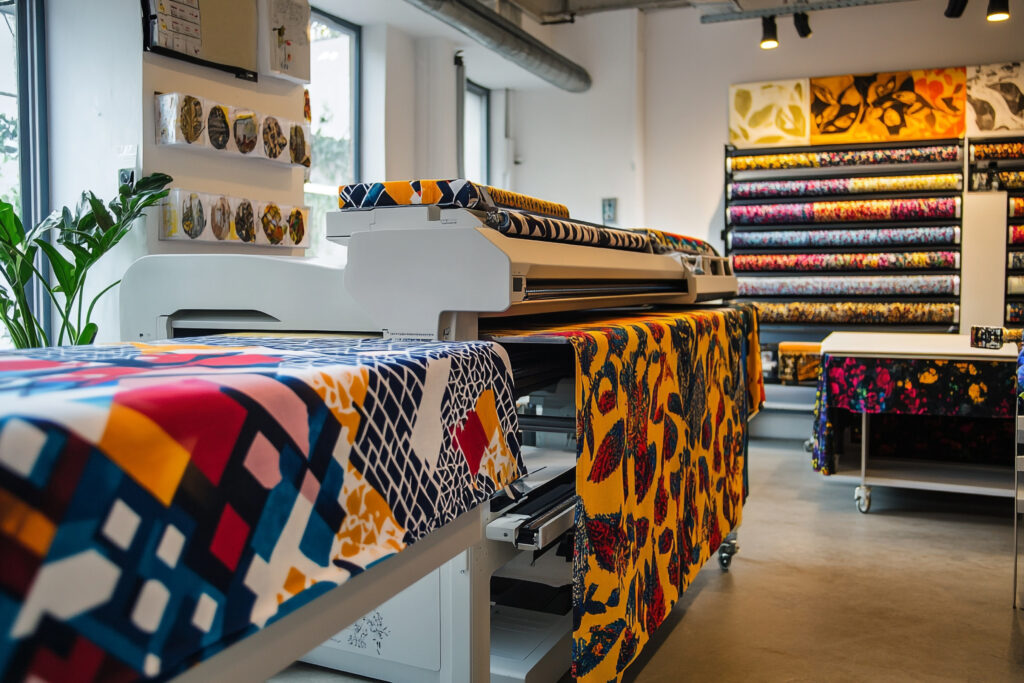
Narsingdi is one of the main textile production and commercial centres of Bangladesh. For this reason, it is also called a textile hub. It is mainly famous for the handloom industry and dyeing factories of Madhabdi and Baburhat (Shekherchar). High-quality cotton cloth, lungis, sarees, dress materials and export-oriented textile products are produced here. There are about five thousand small and large cloth factories in the Narsingdi district. About 70% of the country’s internal cloth demand is met by the textile industry of Narsingdi. Along with meeting domestic demand, the textile industry of Narsingdi also exports cloth abroad. Besides, the country’s largest wholesale cloth markets, Shekherchar and Baburhat, are located in the Narsingdi district.
Famous food of Narsingdi
Lotkon
Narsingdi is famous for lotkon because the district produces the highest quantity and the most delicious lotkon in the country. Lotkon cultivation has gained popularity across the country and has given the district a new identity as the “land of lotkon.” Narsingdi supplies lotkon to meet the demand across the country. Narsingdi lotkon is also exported to various countries of the world, including the Middle East. In addition, Narsingdi lotkon has received GI recognition.
Banana
Narsingdi district is famous in Bangladesh for its delicious bananas. About 10 types of bananas are cultivated in Narsingdi, including Sagar, Amrit Sagar, Champa or Chini Champa, Homai or Somai, Gera Sundar and Sabri bananas. The taste, aroma and quality of Narsingdi bananas were incomparable. Its reputation spread everywhere. Many rulers of Bengal included Narsingdi bananas in their daily diet. The value of bananas was so high that it became the second main cash crop of the Narsingdi people. Bananas produced in Narsingdi were supplied to different parts of the country, even to the capital. During the Pakistan period, a local train of the Bangladesh Railway was named “Kolar Gari.” In February 2024, Narsingdi’s Amrit Sagar banana received official recognition as a Geographical Indication (GI) product of Bangladesh
Besides, Narsingdi is one of the main vegetable-producing and agriculturally rich districts of Bangladesh. A large quantity of bottle gourd, bitter gourd, ridge gourd, okra, vegetables and aromatic Colombo lemons are produced in Narsingdi. These meet local demand, and a large portion of Dhaka’s vegetable market is supplied from Narsingdi. Besides, Colombo lemons of this district are exported to various European countries (Italy, France, Germany, Norway, etc.).
Historical place in Narsingdi
Wari-Bateshwar
Wari-Bateshwar is an important archaeological site in Bangladesh. It is located about three kilometres west of Belabo Upazila in Narsingdi district. The villages of Wari and Bateshwar have long been known as places where punch-marked silver coins were found. Located on the eastern boundary of the Madhupur Tract, formed in the Pleistocene era, these villages have revealed, through detailed exploration and limited archaeological excavation, a fortified city about two and a half thousand years old. Local collector Hanif Pathan and his son Habibullah Pathan brought the signs of this ancient civilisation to public attention through long efforts. Regular scientific excavation began here in 2000. As a result of excavation, some of the oldest punch-marked silver coins of the subcontinent, valuable stone beads, terracotta plaques and remains of brick-built structures have been discovered here.